What This Guide Covers
Engineered wood flooring is a high-performance flooring solution made from a real wood wear layer bonded to a multi-layered core. This construction improves dimensional stability compared to solid wood, making engineered flooring suitable for a wider range of installation methods and environments when correctly specified and installed.
This guide explains how engineered wood flooring should be installed, from essential checks before you begin through to subfloor preparation, layout planning, and the three recognised installation methods: floating, fully bonded (glue-down), and nail-down. It is designed to help you understand the correct process, technical requirements, and critical details that ensure a stable, long-lasting installation.
Scope note:
This guide applies to straight plank engineered wood flooring only. Parquet patterns such as herringbone or chevron require different preparation, layout, and fixing methods and should be installed using our engineered parquet installation guide.
Important installation responsibility:
Engineered wood flooring is considered a professional product and requires a high level of technical knowledge to install correctly. It is the responsibility of the installer to assess site conditions, subfloor suitability, moisture levels, and environmental controls before installation begins. Floor Warehouse recommends that installation is carried out by a qualified and experienced professional floor fitter.
Installation Guide Contents
- 1. Tools & Materials Required
- 2. Before You Start (Critical Checks)
- 3. Underfloor Heating (If Applicable)
- 4. Subfloor Preparation
- 5. Planning the Layout
- 6. Installation Methods Overview
- 7. Installation – Step by Step
- 8. Expansion & Movement Allowances
- 9. Finishing the Floor
- 10. FAQs – Engineered Wood Flooring Installation
- 11. Helpful Videos & Visual Guides
1. Tools & Materials Required
Before starting the installation, ensure all required tools and materials are available. Having everything prepared in advance helps maintain accuracy, efficiency, and a professional finish.
Measuring & Marking Tools
- Tape measure
- Spirit level or straight edge
- Pencil or chalk line
Cutting Tools
- Handsaw, jigsaw, or circular saw suitable for cutting wood flooring
- Workbench or sawhorse for safe cutting
Installation Tools
- Spacers (for maintaining expansion gaps)
- Rubber mallet
- Tapping block
- Pull bar
- Drill and appropriate bits (for subfloor preparation, pipe holes, face fixing, and trims)
- Moisture meter suitable for the subfloor type
- Chisel (for detailed trimming and fittings)
Underlay, Adhesives & Fixings
- Appropriate underlay (for floating installations)
- Underlay tape (where required)
- Wood flooring adhesive (for fully bonded installations or T&G floating joints)
- Flooring nails or screws (for nail-down installations)
Finishing Trims
- Skirting boards, scotia, or beading
- Threshold and transition profiles
Safety Equipment
- Knee pads
- Safety goggles
- Dust mask
- Ear protection
2. Before You Start (Critical Checks)
Before installation begins, several important checks should be completed. These steps help ensure the floor is installed accurately, performs as intended, and achieves a consistent, professional appearance. Taking time at this stage reduces the risk of avoidable issues later in the installation process.
2.1 Board Review & Preparation
Before installation begins, open several packs and review the boards to familiarise yourself with the range of colour, grain, and natural character present.
Engineered wood flooring is made from real timber, so variation between boards is normal and forms part of the finished appearance. Reviewing the boards in advance allows you to plan how these variations are distributed across the floor.
This step helps to:
- Anticipate natural variation across the installation
- Avoid noticeable clustering of similar tones
- Achieve a more balanced and considered final appearance
2.2 Colour Racking & Board Selection
Before laying the floor, open multiple boxes (typically 3–4) and mix boards to achieve a balanced distribution of colour, grain, and character across the room. This process, commonly known as colour racking, is especially important for achieving a natural and visually consistent finish.
As boards are selected:
- Use boards with stronger grain or character as intentional feature elements
- Distribute lighter and darker tones evenly across the floor
- Reserve less visually prominent boards for perimeter areas, cuts, or hidden sections
This approach helps prevent visible colour grouping or repetitive patterns and contributes to a more considered, well-balanced finished floor.
2.3 Acclimatisation & Climate Control
Engineered wood flooring must be acclimatised in the room where it will be installed for a minimum of 48 hours prior to fitting.
During acclimatisation:
- Store packs horizontally on a flat surface
- Distribute weight evenly across the packs
- Do not lean packs vertically against walls
The installation environment must be stable and climate controlled:
- Air temperature: 18–24°C
- Relative humidity: 45–65%
These conditions must be achieved before delivery, maintained during installation, and kept consistent after installation is complete.
For best practice:
- The building should be fully enclosed and weather-tight
- Wet trades (plastering, screeding, painting) must be completed and fully dry
- Flooring should only be delivered once site conditions are suitable
Failure to acclimatise the flooring correctly, or maintain appropriate climate conditions can result in movement, gapping, cupping, or long-term damage and may invalidate the product warranty.
Important: It is the installer’s responsibility to inspect the flooring prior to installation. Once the flooring has been installed, it is deemed to have been inspected and accepted.
3. Underfloor Heating (If Applicable)
Engineered wood flooring can be used with underfloor heating systems when correctly specified, installed, and controlled. Underfloor heating introduces additional thermal movement, so strict temperature management is essential to protect the floor and maintain performance.
UFH System Types
Engineered wood flooring is suitable for use with:
- Water-based (hydronic) underfloor heating systems
- Low-temperature electric underfloor heating systems
The system must be fully commissioned, pressure tested (where applicable), and operating correctly before flooring installation begins.
UFH Status Before Installation
Underfloor heating must be:
- Switched off at least 48 hours before installation
- Allowed to cool fully to ambient room temperature
This applies to both water-based and electric systems.
Maximum Surface Temperature
The maximum surface temperature of the floor must not exceed 27°C at any time. Exceeding this limit can cause excessive movement, joint stress, and surface damage.
Temperature sensors and thermostatic controls must be installed and functioning correctly to ensure safe operation.
Recommissioning & Ramp-Up Rules
After installation is complete:
- Underfloor heating must remain off for a minimum of 48 hours
- Heating should then be increased gradually by no more than 2°C per day
- The maximum surface temperature of 27°C must not be exceeded
Sudden temperature increases can cause rapid expansion and may lead to gapping, cupping, or joint failure.
Installation Method Considerations
- Fully bonded installations are generally preferred over underfloor heating due to improved heat transfer and reduced movement
- Floating installations require careful control and correct underlay selection
Further Guidance
This section provides a summary of essential underfloor heating rules. For full technical guidance, commissioning schedules, and installation best practice, refer to our comprehensive guide on underfloor heating with engineered wood flooring.
4. Subfloor Preparation
Correct subfloor preparation is critical to the performance, appearance, and longevity of engineered wood flooring. The subfloor must be assessed and prepared before installation begins. Installation must not proceed if subfloor conditions fall outside the requirements outlined below.
4.1 Subfloor Requirements – Summary
All subfloors must be:
- Clean – free from dust, debris, old adhesives, paint, grease, or contaminants
- Dry – within specified moisture limits for the subfloor type
- Flat – within acceptable tolerances
- Structurally sound – stable, secure, and capable of supporting the floor
Any loose panels, damaged areas, or structural issues must be rectified before installation.
Installer responsibility:
It is the installer’s responsibility to assess the subfloor and confirm that moisture levels, flatness, structural integrity, and site conditions are suitable. Flooring installation must not proceed unless all requirements are met. Failure to carry out proper subfloor assessment may result in installation failure and invalidate the product warranty.
4.2 Concrete & Screed Subfloors
Concrete and screed subfloors must be fully cured, dry, and level before installation.
Moisture limits
Moisture levels must be checked using appropriate testing methods. As a guide:
- Maximum 4% using a non-destructive moisture meter (e.g. Tramex), or
- 2.5% CM for cement-based screeds
- 0.5% CM for anhydrite (calcium sulphate) screeds
Ambient conditions should be maintained at 45–65% relative humidity and 18–24°C during testing and installation.
Testing methods
Moisture readings should be taken across multiple areas of the floor, including edges and high-risk zones. The installer must be satisfied that the results are consistent and within acceptable limits before proceeding.
Level tolerance
The subfloor must be flat to a tolerance of no more than 3mm over a 3m straight edge. Any deviations outside this tolerance must be corrected using appropriate levelling compounds.
Damp-proof membrane (DPM) requirements
- Floating installations: A suitable sheet DPM or combined underlay/DPM must be used where required
- Fully bonded installations: A liquid surface DPM may be required where residual moisture is present, subject to adhesive compatibility
Always ensure that the chosen DPM system is compatible with the installation method and adhesive being used.
4.3 Timber Subfloors
Timber subfloors must be dry, rigid, and securely fixed before installation begins.
Suitable materials
- Floorboards
- Plywood
- OSB
All boards must be firmly fixed with no movement, deflection, or bounce.
Existing tongue & groove floorboards
When installing over existing floorboards:
- Ensure all boards are securely fixed, flat, and free from infestation
- Replace or repair any damaged sections
- Install the new flooring at a 90° angle to the existing boards to improve stability and reduce the risk of movement transfer
Further Guidance
This section provides a summary of essential subfloor preparation requirements. For detailed assessment methods, moisture management solutions, and preparation best practice, refer to our dedicated Subfloor Preparation Guide.
5. Planning the Layout
Careful planning before installation begins helps achieve a balanced appearance and avoids unnecessary cuts or weak joint patterns. Taking time at this stage will improve both the visual result and the structural performance of the floor.
Board Direction Guidance
In most rooms, engineered wood flooring is best installed along the longest wall. This helps create a sense of flow and can make the space appear larger. In square rooms, board direction may be chosen based on visual preference rather than room shape.
Light Flow Considerations
Where possible, consider laying boards in the direction of natural light, particularly in rooms with large windows or glazed doors. Running boards parallel to the main light source can help reduce the appearance of shadow lines along joints and create a more uniform finish.
Starter Boards
Before laying the first row, plan your starting position to avoid narrow planks at the final row. If necessary, trim the first row so that the last row remains a practical width. Offcuts from the previous row can often be used as starter boards for the next row, helping maintain a strong stagger pattern and reduce waste.
Minimum End-Joint Stagger
End joints must be staggered to maintain strength and visual balance. A minimum stagger of 300mm between end joints in adjacent rows is recommended unless the product manufacturer states otherwise.
Avoiding H-Joints
Avoid aligning end joints across multiple rows, commonly known as H-joints. Repeating joint patterns weaken the floor and create an unnatural appearance. Vary board lengths and starting points to prevent this.
Visual Planning Tips
- Dry-lay several rows before fixing to confirm layout and appearance
- Mix boards from multiple boxes to balance colour and grain variation
- Use boards with stronger character as feature elements
- Reserve less visually consistent boards for cuts or perimeter areas
6. Installation Methods Overview
Engineered wood flooring can be installed using three recognised methods. The correct method depends on:
- Board construction (click-fit or tongue & groove)
- Subfloor type
- Room size and layout
- Presence of underfloor heating
- Required acoustic and structural performance
Selecting the correct method before starting installation is essential to ensure long-term stability, controlled movement, and compliance with manufacturer guidance.
Floating Installation
What it is
A floating installation is where boards are joined to each other but are not fixed to the subfloor. The floor acts as one continuous surface and expands and contracts as a single unit. Movement is managed at the perimeter through correctly sized expansion gaps.
When it’s recommended
- Click-fit engineered wood flooring
- Tongue & groove flooring joined with adhesive at the joints
- Rooms within manufacturer run-length limits
- Installations where easier removal may be required in the future
- Situations where minimal structural fixing to the subfloor is preferred
Underlay requirement
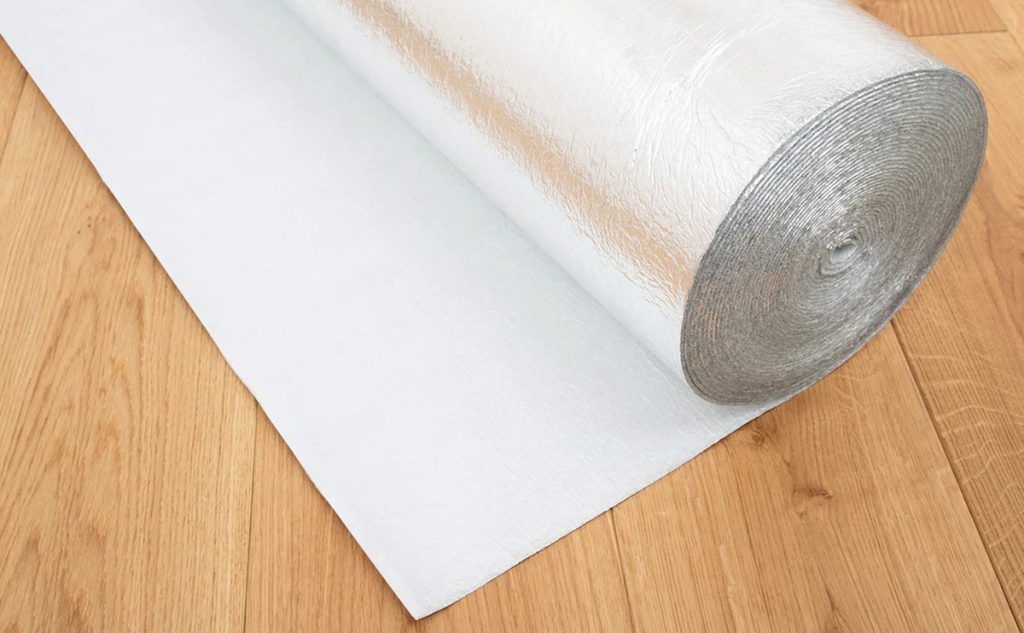
An appropriate underlay is essential for floating installations. Underlay provides:
- Acoustic performance
- Minor subfloor tolerance (not levelling correction)
- Thermal insulation
- Moisture protection where required over mineral subfloors
The underlay must be compatible with underfloor heating if installed over UFH systems.
Click-fit vs Tongue & Groove (glued joints)
- Click-fit boards lock together mechanically and do not require joint adhesive.
- Tongue & groove boards must be joined by applying a continuous bead or controlled spot beads (approximately every 10–15cm) of D3 PVA adhesive into the groove before inserting the tongue.
Important: Floating floors accumulate expansion across their full width. Correct perimeter expansion gaps are critical to prevent compression or peaking.
Fully Bonded (Glue-Down) Installation
What it is
A fully bonded installation involves adhering each board directly to the subfloor using a flexible wood flooring adhesive. The adhesive bed controls movement at board level and distributes expansion stress evenly across the bonded surface.
This method produces a solid feel underfoot and reduces hollow sound.
When it’s recommended
- Tongue & groove engineered wood flooring
- Installations over underfloor heating systems
- Wider boards (typically 180mm+)
- Larger or open-plan floor areas
- Areas requiring maximum stability and reduced vertical deflection
Adhesive type overview
A flexible polyurethane or MS polymer wood flooring adhesive must be used. The adhesive must remain elastomeric after curing to absorb natural wood movement.
Always follow the adhesive manufacturer’s guidance regarding:
- Subfloor preparation and priming
- Trowel notch size
- Coverage rate
- Open time and working time
Rigid adhesives are not suitable.
When click-fit may be used
Click-fit engineered boards are primarily designed for floating installation. They should only be fully bonded if explicitly approved by the board manufacturer. If permitted, installation must follow manufacturer-specific guidance, particularly where underfloor heating is involved.
Nail-Down Installation
What it is
The nail-down method involves secret nailing through the tongue at approximately a 45° angle into a suitable timber subfloor. Each fixing is concealed once the next board is installed.
This method mechanically secures the boards while allowing controlled seasonal movement across the floor.
Timber subfloor requirement
This method is only suitable for timber-based subfloors, including:
- Plywood
- OSB
- Existing structural timber floorboards
It cannot be used directly over concrete or screed without a structural timber overlay.
Why click-fit is excluded
Click-fit engineered boards are not designed to be nailed. Nailing through a click-locking profile can damage the joint system, compromise board integrity, and void manufacturer warranties.
7. Installation – Step by Step
Each installation method must be followed independently. Do not mix methods within the same installation unless specifically approved by the flooring and adhesive manufacturers.
7.1 Universal Installation Rules (Applies to All Methods)
The following rules apply to all engineered wood flooring installations, regardless of installation method.
Starting position
- Begin installation from the longest, straightest wall
Expansion gaps
- Leave a continuous expansion gap of 10–12mm around the entire perimeter of the floor and around all fixed objects
- In larger installations or areas subject to greater environmental variation, a larger expansion gap may be required (up to 15mm)
Row progression
- Stagger end joints by a minimum of 300mm
- Use offcuts from the previous row as starter boards where possible
- Avoid repeating joint patterns or H-joints
- Check alignment regularly throughout installation
7.2 Floating Installation
A floating installation allows the floor to move as a single surface and is suitable for click-fit boards or tongue & groove boards joined with adhesive at the joints.
First row setup
- Begin in the corner of the longest, straightest wall
- Lay the first row with the appropriate edge facing the wall, depending on the joint system:
- Tongue & groove boards: install with the groove facing the wall (groove can be trimmed off)
- Click-fit boards: follow the manufacturer’s recommended starting orientation for the locking system (usually tongue facing the wall)
- Use spacers to maintain the expansion gap
- Ensure the first row is perfectly straight, as it determines the alignment of the entire floor
Joining method (click-fit vs T&G glue)
- Click-fit boards: Angle the tongue into the groove of the adjacent board and press or tap the joint closed until it locks securely, following the normal click-fit installation technique. Ensure joints are fully engaged along their full length with no visible gaps.
- Tongue & groove boards: Apply a continuous bead of PVA adhesive into the groove before inserting the tongue, then close the joint fully using a tapping block.
When installing tongue & groove boards as a floating floor, adhesive must be applied to both the long edges and the short end joints.
Last row fitting
- Measure and cut boards to fit, maintaining the expansion gap
- Use a pull bar to close the final joints carefully
Curing / waiting time
Where adhesive is used at tongue & groove joints, avoid walking on the floor for at least 12–24 hours, or as recommended by the adhesive manufacturer.
7.3 Fully Bonded Installation
A fully bonded installation fixes each board directly to the subfloor using a flexible wood flooring adhesive, creating a highly stable floor with reduced movement.
Adhesive preparation
Use a flexible polyurethane or MS polymer wood flooring adhesive suitable for engineered wood flooring and compatible with the subfloor. Ensure the adhesive is appropriate for the installation conditions and flooring type before starting.
Read and follow the adhesive manufacturer’s instructions before starting.
Trowel selection
Use the notched trowel specified for the adhesive being used. Using an incorrect trowel can result in insufficient adhesive coverage, poor bond strength, and installation failure.
Working area limits
Apply adhesive only to an area that can be covered within the adhesive’s stated open time. This is typically 1–2 square metres at a time, depending on site conditions and adhesive type.
Board placement
- Start from the longest, straightest wall
- Install tongue & groove boards with the groove facing the wall
- Engage the tongue into the groove at a slight angle, then carefully lower the board into the adhesive bed
- Press firmly across the full board surface to achieve complete adhesive contact
Boards should be positioned accurately as they are placed, as adjustment after bedding into adhesive is limited.
Cleaning adhesive residue
MS polymer or polyurethane adhesives are extremely difficult to remove once cured on the surface of the wood.
- Keep a pack of specialist flooring adhesive wipes on hand at all times.
- If adhesive gets on the finished face of the board, wipe it off immediately.
- Once cured, residue can permanently mar the finish and may be impossible to remove without damaging the wood.
Initial curing time
Avoid walking on the floor for at least 24 hours, or as specified by the adhesive manufacturer. Do not install trims or move furniture until the adhesive has fully cured.
7.4 Nail-Down Installation
The nail-down method secures boards to a timber subfloor using secret nailing through the tongue.
First row face fixing
- Start along the longest wall with the groove facing the wall
- Maintain the required expansion gap using spacers
Where access prevents correct nailing angle, face-fix the first row, positioning fixings so they will be concealed by skirting or trims.
Secret nailing method
- Secure subsequent rows by nailing through the tongue at approximately a 45° angle
- Fix at intervals of 150–200 mm along the length of the board and within 50 mm of each board end
- Use a professional flooring nailer or suitable fixing system
- Ensure boards are fully seated before fixing
Tool guidance
Use fixings and tools recommended for engineered wood flooring. Incorrect nail size, angle, or spacing can lead to board movement, squeaks, or joint damage.
Final row fixing
The final row may require face fixing where access is limited. Maintain expansion gaps and conceal fixings with skirting or finishing trims.
8. Expansion & Movement Allowances
Engineered wood flooring is a natural material and will expand and contract in response to changes in temperature and humidity. Allowing for this movement is essential to prevent stress, distortion, or failure of the floor.
Standard perimeter expansion gap
A continuous expansion gap of 10–12mm must be left around the entire perimeter of the floor. This gap must be maintained at all walls and must not be restricted by fixings, trims, or other obstructions.
Doorways and fixed objects
Expansion gaps must also be left wherever the flooring meets:
- Door frames and thresholds
- Structural columns
- Staircases
- Pipes and services
- Kitchen units and fixed cabinetry
Large floor areas
In larger installations or continuous floor areas exceeding approximately 80m², additional movement allowance may be required. This may include:
- Increasing the perimeter expansion gap (up to 15mm where appropriate)
- Introducing expansion breaks at doorways or transitions
Always assess large or uninterrupted areas carefully before installation.
Environmental variation
Floors installed in areas subject to greater temperature or humidity variation will experience increased movement. Stable, climate-controlled conditions should be maintained before, during, and after installation to minimise seasonal movement and protect the floor’s performance.
Failure to allow for adequate expansion and movement can result in gapping, lifting, or joint stress and may invalidate the product warranty.
9. Finishing the Floor
During installation, careful detailing is required around pipes, door frames, and transitions. Correct finishing allows the floor to move naturally while delivering a clean, professional appearance.
Fitting around pipes
- Mark the pipe position accurately on the board
- Drill a hole slightly larger than the pipe diameter to allow for expansion
- Cut from the edge of the board to the hole to create a removable section
- Fit the board into position, then glue the cut section back behind the pipe
- Cover the expansion gap using a pipe rose or suitable trim
Expansion space must always be maintained around pipes.
Door frames and architraves
- Undercut door frames and architraves so the flooring can slide neatly underneath
- Use an offcut of flooring and underlay as a height guide when trimming
- Do not force boards tight to frames, as this can restrict natural movement
Doors may need trimming before refitting to accommodate the new floor height.
Trims, thresholds, and beading
Trims are used to cover expansion gaps and provide clean transitions between floor finishes.
- Beading or scotia
Fixed to the skirting or wall, not the floor - Thresholds and transition profiles
Fixed to the subfloor, not the floor
This allows the flooring to expand and contract freely beneath the trim.
Trims and thresholds must never be fixed through the flooring itself.
Fixing trims to the floor will restrict natural movement and may lead to gapping, lifting, or joint stress.
Final checks
- Remove all spacers once installation is complete
- Ensure expansion gaps remain clear and unrestricted
Once complete, the floor is ready for use. Correct care and maintenance are essential to long-term performance—refer to our Wood Flooring Care & Maintenance Guide for full guidance.
10. FAQs – Engineered Wood Flooring Installation
Engineered wood is more dimensionally stable than solid wood, but it’s still real timber and will move with changes in temperature and humidity. Most installation issues come from one of three areas: incorrect moisture control, inadequate subfloor preparation, or using the wrong installation method for the board and site. These FAQs cover the key points that protect the floor’s performance and reduce the risk of failure.
Yes. Engineered wood flooring should be acclimatised in the room where it will be installed (minimum 48 hours), with stable, normal living conditions.
Best practice:
- Store packs flat, indoors, in the installation room
- Maintain 18–24°C and 45–65% RH before and during installation
- Ensure wet trades are complete and fully dry
Acclimatisation and climate control reduce the risk of excessive movement, gapping, or cupping after installation.
Moisture must be checked before installation using an appropriate test method for the subfloor.
As a general guide (always follow the flooring/adhesive/DPM manufacturer where specified):
- Concrete/cement screed: ≤2.5% CM
- Anhydrite screed: ≤0.5% CM
- Timber subfloors: typically ≤14% moisture content
If moisture is above the allowable limit, installation must not proceed until either:
- The subfloor dries to acceptable levels, or
- A compatible moisture mitigation system is specified (e.g., a surface liquid DPM for fully bonded installs, or a sheet/combined DPM underlay for floating installs).
Flatness matters more than most people expect. A subfloor that’s “nearly flat” can still create bounce, gaps, noise, and visible unevenness.
General tolerance:
- No more than 3mm deviation over a 3m straight edge
If the subfloor is outside tolerance, it must be corrected using suitable levelling compounds (concrete/screed) or structural overlays (timber) before installation begins.
Yes, provided the flooring specification, installation method, adhesive/underlay, and UFH controls are compatible and UFH commissioning rules are followed.
Key rules:
- UFH off for 48 hours before installation, and allow the floor to cool to ambient
- Maximum finished floor surface temperature 27°C
- After installation, keep UFH off for 48 hours, then increase temperature gradually (max 2°C per day)
Fully bonded installations are often preferred over UFH due to improved heat transfer and reduced movement.
Not usually. Click-fit boards are primarily designed for floating installation.
Glue-down is only acceptable if:
- The board manufacturer explicitly approves full bonding for that specific product, and
- The adhesive and method are confirmed compatible (including UFH requirements where applicable)
If full bonding is not approved for the click system, bonding can damage joint integrity and lead to gaps, stress, or failure.
It depends on the board joint system, subfloor type, and performance requirements:
- Floating: common for click-fit boards and some T&G systems (with glued joints). Faster, but movement and acoustics depend heavily on underlay choice and site conditions.
- Fully bonded: best for stability, larger areas, and UFH. Requires correct subfloor prep and adhesive coverage.
- Nail-down: only for suitable timber subfloors (plywood/OSB/floorboards). Not for concrete without a proper timber overlay.
The “best” method is the one suited to the subfloor and the board design — not personal preference.
Boards should be inspected and set aside before installation. Once boards are installed, they are generally considered accepted.
If a problem is found after installation:
- Stop and assess whether it’s a surface issue, joint issue, or a site/installation issue
- For floating floors, localised board replacement may be possible depending on access and locking direction
- For glue-down floors, replacement is possible but more invasive (cut-out and patch repair) and should be carried out by a competent fitter to avoid visible repair lines or damage to adjacent boards
The best prevention is careful pre-install checks and colour racking before fitting begins.
11. Helpful Videos & Visual Guides
This guide is designed to be followed step by step, but some stages are easier to understand with a visual reference — particularly where technique matters (locking joints, adhesive coverage, and secret nailing).
The videos below are intended as visual support only. Always prioritise:
- the flooring manufacturer’s installation guidance
- adhesive/underlay/fixing manufacturer instructions
- the site conditions and requirements outlined in this guide
Floating Installation – Fundamentals (Click Engineered Boards)
What this video shows:
• Choosing and installing the correct underlay
• Planning the layout to avoid narrow perimeter cuts
• Setting a straight starting line
• Maintaining expansion gaps
• Angle-to-angle click joint engagement using standard installation tools
Why it matters
This is a concise visual overview of floating installation in a standard square room. It reinforces the core fundamentals covered earlier in this guide without introducing unnecessary complexity, making it ideal for understanding the overall sequence before installation begins.
Fully Bonded Tutorial – Adhesive Application (Tover)
What this video shows:
• Correct adhesive spread using the manufacturer’s recommended trowel size
• Working within open time
• Board placement into the adhesive bed
• Achieving full coverage and contact
Why it matters:
Correct adhesive application is critical to the performance of a fully bonded installation. This tutorial demonstrates practical glue-down technique using a professional wood flooring adhesive and reinforces the application principles outlined in Section 6.3 of this guide.
Final Note
Engineered wood flooring is a natural product that relies on correct preparation, installation, and environmental control for long-term performance. Always follow product-specific manufacturer guidance alongside the principles outlined in this guide.
Explore Our Engineered Wood Flooring Collection
Engineered wood flooring suitable for floating, fully bonded, and nail-down installation methods.
Honey Glazed Oak Herringbone, Brushed & UV Lacquered – 120mm x 15mm Engineered Parquet Wood Flooring
Invisible Raw Oak Herringbone, Brushed & UV Lacquered – 90mm x 15mm Engineered Parquet Wood Flooring
Winter Moonlight Oak Plank, Brushed & Matt Lacquered – 180mm x 14mm Click Engineered Wood Flooring
About Floor Warehouse
Floor Warehouse is a UK-based flooring specialist with over 15 years of combined industry experience in sourcing, selling, and advising on wood, laminate, SPC, and LVT flooring. Our expert advice is written to help homeowners, designers, and trade professionals make informed flooring decisions — from installation and maintenance to underfloor heating compatibility, sustainability, and long-term performance. All guidance is based on real-world product knowledge, manufacturer standards, and common questions we see every day from customers across the UK.
View all posts by Floor Warehouse