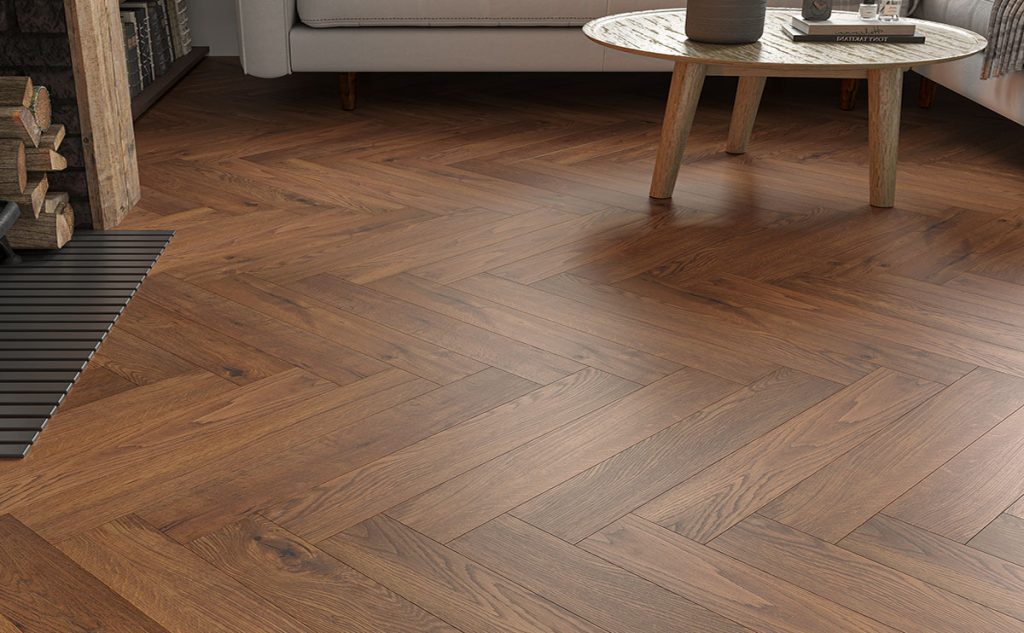
Click LVT herringbone flooring, also known as SPC (Stone Polymer Composite) rigid core vinyl, uses a precision click-lock system to form a floating herringbone floor without the need for adhesive.

Installing herringbone SPC flooring requires a little more planning than straight planks, but when set out correctly it delivers a clean, structured, and highly professional finish. This guide walks you through each stage of the installation clearly and practically — from preparing the room and setting out reference lines to building the herringbone pattern and finishing the floor.

It’s suitable for confident DIYers and professional installers alike, using UK-relevant guidance based on how click herringbone SPC flooring is fitted in real homes. The focus is on accuracy, alignment, and repeatability, helping the pattern stay true across the room from start to finish.

Related LVT Installation Guides

If you are installing a different LVT format or installation method, refer to the appropriate guide below:

Each format requires different set-out and installation methods. Always follow the guide specific to your product type.

1. Tools & Materials You’ll Need


Having the right tools ready before you start will make the installation smoother and help you achieve a neat, professional finish. Most of the tools required are standard for Click LVT (SPC) installations.

Essential Tools

  • Tape measure – for measuring the room and setting out reference lines
  • Spirit level or long straight edge – to check the subfloor is flat and to keep the herringbone pattern aligned
  • Pencil – for marking cut lines and layout references
  • Utility knife – for cutting SPC planks using the score and snap method
  • Spacers – to maintain the required expansion gap around the room perimeter
  • Tapping block and pull bar – for closing joints and fitting planks near walls
  • Rubber mallet – for gently engaging the click system where required

Helpful Extras

  • Workbench or sawhorse – provides a stable surface when cutting planks
  • Combination square or T-square – useful for accurate marking and clean cuts
  • Drill and hole saw – for cutting around pipes or fixed services
  • Chalk line or string line – helpful for marking centre and reference lines when setting out the herringbone pattern
  • Moisture meter – useful for checking concrete subfloors before installation
  • Skirting boards, beading, or trims – to finish edges and cover expansion gaps once the floor is laid

Safety Equipment

  • Knee pads – for comfort during installation
  • Safety goggles – to protect your eyes when cutting planks
  • Dust mask – recommended when sawing or trimming
  • Ear protection – if using power tools

2. Room Conditions & Planning Ahead


Taking a little time to prepare the room and plan ahead will make installation smoother and help ensure the herringbone pattern remains accurate throughout the floor.

Room Conditions

Click LVT (SPC) herringbone flooring should be installed in a dry, enclosed space under normal living conditions. Aim to keep the room at a stable, comfortable temperature, ideally between 18°C and 27°C, both before and during installation.

Avoid installing the floor in areas where temperatures fluctuate significantly or where the room is not yet fully weather-tight, as stability is especially important for herringbone patterns. Installation should only take place once all wet trades are complete.

Subfloor Overview

Click LVT (SPC) herringbone flooring can be installed over most common subfloors, including concrete and wooden subfloors, provided they are stable and suitable for a floating floor.

Any existing floor coverings should be removed before installation, leaving a solid base for the new floor. Further guidance on preparing the subfloor is covered later in this guide.

Measuring the Room

Measure the length and width of the room to calculate the total square metres required. Take measurements at several points, particularly in older or irregularly shaped rooms, and use the largest measurement to ensure accurate coverage.

Ordering the Correct Quantity

When ordering your Click LVT (SPC) herringbone flooring, allow an additional 10–15% for cutting, waste, and pattern layout. Herringbone installations typically require a little more cutting than straight-plank floors, so this allowance helps ensure you can complete the installation without interruption.

Important: It is the installer’s responsibility to inspect the flooring prior to installation. Installation of the product confirms that the material has been checked and accepted.

3. Acclimatising Click LVT (SPC) Herringbone Flooring


Before installation, allow your Click LVT (SPC) herringbone flooring to acclimatise in the room where it will be fitted for 24–48 hours. This allows the planks to adjust to the ambient conditions and supports a smooth, consistent installation.

Keep the packs flat and stored on a level surface, away from direct heat sources or strong sunlight. The room should be maintained at normal living conditions, with a stable temperature and no extreme changes during this period.

If the room has underfloor heating, ensure the system is switched off during acclimatisation and installation. Full guidance on using underfloor heating with SPC flooring is provided later in this guide.

4. Preparing the Subfloor


Click LVT (SPC) herringbone flooring performs best when installed over a clean, dry, flat, and stable base. Because herringbone patterns rely on precise alignment, subfloor preparation is especially important to achieve a clean, accurate finish.

Clean & Dry

The subfloor should be free from dust, debris, paint, old adhesive residue, or loose material. Sweep and vacuum thoroughly before installation. Any spills or damp patches should be fully dry before the flooring is laid.

Flatness Tolerance

The subfloor must be level to within 3mm over a 2-metre straight edge. This tolerance is particularly important for herringbone installations, as even small uneven areas can affect joint alignment and cause the pattern to drift.

High spots or dips beyond this tolerance should be corrected before installation to ensure the planks sit evenly and the click system engages properly.

Moisture Awareness

Concrete subfloors should be dry and suitable for a floating floor installation. Where moisture levels are elevated, a suitable surface damp-proof membrane should be installed in accordance with manufacturer guidance. Wooden subfloors should be sound, securely fixed, and free from movement.

Existing Floor Removal

Remove any existing floor coverings, trims, or fixings before installation. Ensure nails or screws are set below the surface so they do not interfere with the underlay or plank connections.

Built-in Underlay

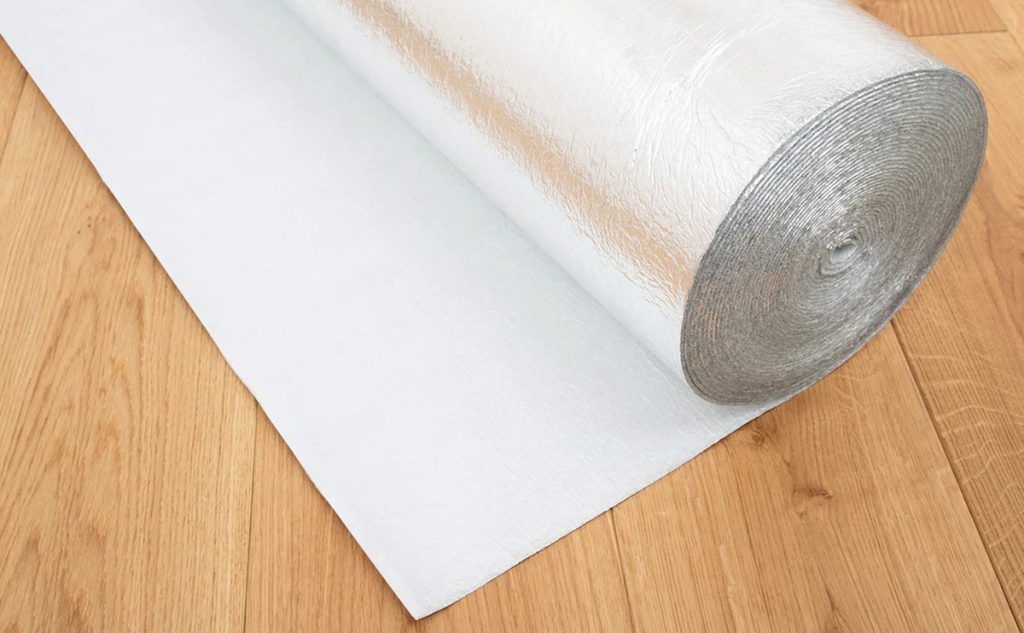
Click LVT (SPC) herringbone flooring is supplied with a built-in underlay, designed to provide comfort and acoustic performance. No additional underlay should be installed unless specifically approved for use with the product.


For more detailed guidance on subfloor levelling, moisture testing, and preparation standards, see our full Subfloor Preparation Guide.

Straight Edge Flatness Concrete Subfloor
The subfloor must be flat to a tolerance of no more than 3mm over a 2m

5. Planning the Herringbone Layout


Herringbone flooring relies on symmetry and alignment, so taking time to plan the layout before installation begins is essential for achieving a clean, balanced finish.

A & B Planks Explained

Click LVT (SPC) herringbone flooring is supplied with two plank types, commonly labelled “A” planks and “B” planks. These are mirror-image pieces designed to lock together correctly and form the herringbone pattern.

This configuration is common in parquet and herringbone flooring and ensures joints align consistently throughout the installation. Both plank types are used together and must be installed in the correct sequence to maintain the pattern.

Before starting, open several boxes and make sure you have a mix of both A and B planks available. The plank type is clearly marked on the back of each board or on the packaging. Keeping both types to hand as you work helps the installation flow smoothly and avoids interrupting the pattern mid-row.

Pattern Orientation

Decide which direction you want the herringbone pattern to run. In most rooms, the pattern works best aligned with the longest dimension of the room or the main visual axis when entering the space, helping the layout feel balanced and intentional.

Centre Line & Reference Lines

Herringbone installation always starts from a central reference line rather than from a wall.

  • Measure the width of the room and mark the centre point
  • Snap or draw a straight centre line along the length of the room
  • This line will be used to align the starter pattern

Check that the centre line is square to the room before you begin building the pattern. This can be done using a 3-4-5 method or by measuring diagonals to confirm accuracy.

Walls are rarely perfectly straight, so relying on a centre line helps prevent the pattern from drifting as the floor is built out.

Dry Laying the Starter Pattern

Before clicking any planks together, dry-lay a small section of the herringbone pattern along the centre line. This allows you to:

  • Confirm the pattern orientation
  • Check alignment against the reference line
  • Make small adjustments before committing

Spending a few minutes on this step helps the pattern stay true across the room and avoids corrections later in the installation.

6. Installing Your Click LVT (SPC) Herringbone Floor – Step by Step


The steps below apply specifically to Click LVT (SPC) herringbone installations. For straight-plank SPC installation, see our Click LVT (SPC) Plank Flooring Installation Guide.

1

Building the Starter Zig-Zag

Begin at the centre line using two planks to form the first “V” shape, with one plank facing left and the other facing right (A & B).

  • Align the starter ‘V’ so the centre of the zig-zag sits exactly on your centre reference line.
  • Position the starter section so a 6mm expansion gap will be maintained once the pattern reaches the walls.
  • Check the angle carefully — this first set determines the alignment of the entire floor.
  • Ensure both starter planks sit flat and are fully locked before continuing.

Building a Stable Starter

It is advisable to build a small starter section of approximately 3–5 planks before extending further. Once aligned to the centre line, this section may be gently weighted with unopened boxes of flooring to prevent movement while subsequent rows are installed.

2

Establishing the First Rows

Once the starter section is secure, extend the pattern in both directions along the centre line.

A & B Plank Sequencing

Herringbone SPC systems rely on alternating Type A and Type B planks to maintain correct geometry.

  • Confirm the correct plank type before each installation.
  • Ensure the tongue and groove orientation matches the exposed locking edge.
  • Work in the direction that keeps the next locking edge accessible and allows clean engagement (follow the manufacturer’s recommended orientation for your click profile).

Incorrect sequencing will disrupt the pattern and prevent proper joint engagement.

3

Expanding the Pattern Outwards

After several rows are established, continue building outward towards the walls on both sides of the room.

  • The floor should build evenly as a single floating surface.
  • Do not force joints into position. If resistance is felt, lift the plank, check alignment, and re-engage (typically long edge first, followed by the short edge, depending on the locking profile).
  • Maintain the repeating “V” formation consistently across the installation.
4

Maintaining Alignment & Pattern Accuracy

Herringbone layouts highlight minor inaccuracies, so regular checks are essential.

  • Step back periodically to visually check the alignment of the zig-zag lines.
  • Use a straight edge across multiple planks to confirm the pattern remains true.
  • Never strike a plank directly with a hammer. Use a tapping block where required to protect the locking profile.
5

Cutting Edge Pieces

Once the main field is complete, cut the perimeter pieces while maintaining the 6mm expansion gap.

Score and Snap Method

If a mitre saw is not available, SPC planks can be cut manually:

  • Score the decorative surface 2–3 times with a utility knife.
  • Apply firm downward pressure to snap the plank along the scored line.
  • Trim the integrated underlay on the reverse to complete the cut.
6

Final Rows & Borders

Install the final edge pieces, ensuring the 6mm expansion gap is maintained around the perimeter.

  • Use a pull bar where space does not allow for a tapping block.
  • Remove all spacers and visually inspect the floor surface before fitting skirting boards or scotia trims.
SPC Plank Installation Angle

7. Expansion & Movement Rules


Click LVT (SPC) herringbone flooring is installed as a floating floor, which means it needs a small amount of space to move as a complete surface. Allowing for this movement during installation helps the floor perform correctly over time and keeps joints looking clean and aligned.

Perimeter Gaps

Leave a consistent 6mm expansion gap around the entire perimeter of the room. This gap should be maintained between the flooring and all walls, skirting boards, and vertical surfaces. Use spacers during installation and remove them once the floor is complete.

Fixed Objects

A 6mm expansion gap should also be left around all fixed objects, including:

  • Kitchen units and fitted furniture
  • Radiator pipes
  • Structural columns
  • Door frames and thresholds

The flooring should never be tight against any fixed element.

Kitchen Cabinets & Islands

Click LVT (SPC) flooring should not be installed underneath heavy kitchen cabinets or islands. These items should be fitted first, with the flooring installed around them and the correct expansion gap maintained.

Kitchen units and islands typically use plinths, which can be used to neatly cover the flooring edge while still allowing the floor to move freely.

Installing heavy, fixed furniture on top of a floating floor can restrict movement and may lead to stress or distortion over time.

Doorways

Expansion gaps must be allowed at doorways and openings between rooms. Where the same Click LVT (SPC) flooring is installed continuously between adjoining rooms, the floor can often run through without a transition, provided it is free to move as a single floating surface.

Threshold or transition profiles should be used where required to maintain expansion gaps, accommodate movement, or where different flooring types meet.

Large Rooms & Long Runs

Click LVT (SPC) herringbone flooring can usually be installed as one continuous floor across multiple rooms or long runs, provided expansion gaps are maintained and the floor is not restricted by fixed objects.

Where the floor extends beyond approximately 10 metres in one direction, approaches or exceeds approximately 100m², or movement may be restricted, a transition profile can be used to divide the floor into smaller sections, each with its own expansion allowance.

Transitions

Use appropriate transition profiles where the SPC flooring meets:

  • Other flooring types
  • Separate rooms
  • Changes in direction

Transitions help accommodate movement while creating a clean, finished appearance.

8. Underfloor Heating Compatibility


Click LVT (SPC) herringbone flooring works very well with water-based underfloor heating systems when installed and operated correctly. These systems provide slow, even heat, which suits floating SPC floors and helps maintain consistent performance across the surface.

Water-Based Underfloor Heating

Water-based (hydronic) underfloor heating systems are the preferred option for Click LVT (SPC) herringbone flooring. When installed within the subfloor and controlled accurately, they offer stable heat distribution and reliable day-to-day use.

The maximum finished floor surface temperature should not exceed 27°C. To allow conditions to stabilise, the heating system should be switched off at least 48 hours before installation. After installation, the system can be switched back on gradually, increasing the temperature by no more than 5°C per day until normal operating levels are reached.

The system should be fully commissioned and pressure-tested before flooring installation begins.

Electric Underfloor Heating

Some electric underfloor heating systems may be suitable for use beneath Click LVT (SPC) herringbone flooring when they are fully embedded within the subfloor and provide accurate temperature control. Because electric systems can vary widely in design and performance, compatibility should be confirmed with the underfloor heating manufacturer and the flooring supplier before installation.

This approach helps ensure temperatures remain consistent across the floor surface and supports long-term performance.

Why Temperature Control Matters

Maintaining stable temperatures allows the flooring system to expand and contract evenly as a single floating surface. This helps keep joints aligned, prevents localised stress, and ensures the floor continues to look and perform as intended.

For more detailed guidance on system setup, commissioning, and temperature control, see our dedicated guide: LVT Click (SPC) Flooring & Underfloor Heating Guide.

Digital Thermostat Temperature Control

9. Finishing Details


Once the main floor is installed, a few finishing touches will help achieve a clean, professional result and allow the floor to perform as intended.

Fitting Around Pipes

Where pipes pass through the floor, mark their positions carefully on the plank. Drill a hole slightly larger than the pipe to allow for expansion. The plank can then be cut to the hole and fitted into place.

If needed, a small offcut can be glued back in position behind the pipe to create a neat finish. Pipe covers can also be used to conceal the expansion gap.

Door Frames

For a tidy result at doorways, the bottom of the door frame or architrave can be undercut so the flooring slides neatly underneath. This allows the floor to move freely while avoiding visible gaps.

When working around door frames, take your time and test-fit planks before locking them fully into place.

Transitions

Transition profiles are used where the SPC flooring meets other floor types, changes direction, or passes through doorways where an expansion gap needs to be covered. The profile should sit above the floor without restricting movement.

Skirting Boards & Trims

Skirting boards, beading, or edge trims are used to cover the expansion gap around the perimeter of the room. These should be fixed to the wall, not the floor, allowing the Click LVT (SPC) herringbone flooring to move freely underneath.

Trims should be colour-matched to the skirting or wall finish, rather than the flooring itself. These profiles are designed to blend into the skirting line, creating a clean transition without drawing attention to the edge of the floor.

Spare Planks

It’s a good idea to keep a few spare planks once installation is complete. These can be useful for future repairs or replacements and are best stored flat in a dry area.

10. Final Checks & After Installation Care


Once installation is complete, remove all spacers from around the perimeter of the room and check that the floor surface sits flat and even. Visually inspect the joints to confirm they are fully engaged, aligned, and level before fitting skirting boards or trims.

Give the floor a light clean using a soft brush or vacuum to remove any dust from installation. Avoid using excess moisture at this stage.

Furniture can be returned once installation is complete, provided items are lifted into position rather than dragged. Dragging heavy furniture can stress joints and damage the surface of the floor.

For ongoing care, regular sweeping or vacuuming will help keep the floor looking its best. Using felt pads under furniture and placing mats at entrances will help reduce everyday wear and protect the locking system.

For full cleaning advice and long-term care recommendations, see our dedicated guide: LVT & SPC Flooring Care & Maintenance Guide.

11. Installation FAQs – Click LVT (SPC) Herringbone Flooring


These FAQs address the most common technical issues that affect Click LVT (SPC) installations, particularly those relating to subfloor preparation, movement allowance, and joint engagement.

Is herringbone SPC harder to install than straight-plank click flooring?

Herringbone SPC installation is typically more demanding than straight-plank click flooring because the pattern relies on accurate set-out and early-row control. Minor alignment errors can compound as the layout expands across the room.
Once the centre line is established correctly and the starter section is stable and fully locked, the click-lock system allows the floor to build consistently with controlled, methodical installation.

Why must herringbone installation start from the centre of the room?

Herringbone layouts should be set out from a central reference line rather than from a wall. Walls are rarely perfectly straight, and working from a perimeter edge increases the risk of cumulative drift and uneven border finishes.
A central set-out keeps the pattern balanced and visually consistent as it progresses towards both sides of the room.

What subfloor flatness is required for herringbone SPC flooring?

The subfloor must be flat to within 3mm over a 2-metre straight edge. This tolerance is particularly important for herringbone layouts due to the number of joints and the way the zig-zag points align.
Dips and high spots can affect joint engagement, create uneven angles, and lead to visible pattern distortion. Subfloor preparation is therefore more critical for herringbone installations than for straight-plank systems.

What are A and B planks, and what happens if they’re mixed incorrectly?

Herringbone SPC systems use two mirror-image planks (A and B) designed to lock together in an alternating sequence to form the correct pattern geometry.
Incorrect sequencing can prevent joints from engaging properly and will disrupt alignment as the installation progresses. Plank types should be identified and kept organised before starting the set-out.

Can herringbone SPC flooring run through multiple rooms without transitions?

Continuous installation between rooms is possible where the floor can move freely as a single floating surface and expansion allowances are maintained throughout.
Transition profiles are often recommended where:

  •  The floor passes through doorways or narrow openings
  • The run becomes long (around 10 metres or more)
  • The total area approaches or exceeds roughly 100m²
  • Fixed furniture or tight thresholds may restrict movement

Where movement restriction is likely, incorporating a discreet transition profile reduces the risk of joint stress or pattern distortion.

Is herringbone SPC suitable for underfloor heating?

Herringbone SPC flooring is compatible with underfloor heating systems when temperature limits are controlled. The finished floor surface temperature must not exceed 27°C.
The heating system should be switched off at least 48 hours before installation, remain off during fitting, and then be recommissioned gradually after installation. This reduces the risk of uneven thermal movement across the floating floor.

What should I do if the herringbone pattern starts to drift?

Pattern drift should be corrected as early as possible. Herringbone layouts visually magnify minor inaccuracies, and continued installation can compound the deviation across the room.
The affected area should be lifted back to the last correctly aligned section, checked against the centre reference line, and rebuilt before progressing. Ongoing checks with a straight edge and regular visual sight lines help maintain alignment.

12. Helpful Videos & Visual Guides


This guide is designed to be followed step by step, but a short visual reference can be genuinely useful for SPC click flooring — especially for joint engagement technique, working near walls, and handling non drop-lock short ends.

The videos below are intended as visual support only. Always prioritise:

  • the flooring manufacturer’s installation instructions for your specific click profile
  • the expansion and movement rules in this guide
  • correct subfloor flatness and preparation (click systems fail when the base isn’t flat)

Full Click LVT (SPC) Herringbone (Uniclic) Installation Overview in less than 60 seconds

This short video provides a start-to-finish overview of installing click LVT herringbone flooring, from subfloor preparation through to final fitting details.

It demonstrates:

  • Preparing the subfloor, including applying self-levelling compound
  • Correctly angling and engaging A and B planks
  • Using an LVT tapping block to close long-edge joints
  • Using a pull bar to secure short-end connections near walls
  • Cutting neatly around fixed features
  • Avoiding installation beneath heavy kitchen units

The techniques shown reflect standard practice for floating click LVT systems. Always ensure the subfloor meets flatness requirements and that the floor remains free to move, particularly around fixed cabinetry and structural elements.

Full SPC Herringbone Installation – Traditional Centre Spine Method (Short-End Gap Technique Highlighted)

This full-length installation video follows a fitter through a complete SPC click herringbone project from start to finish. It provides detailed, real-world guidance and includes an alternative set-out approach using a traditional centre spine installation rather than a starter triangle.

For installers who prefer to see the full process in context — including layout planning, sequencing, and perimeter finishing — you are welcome to watch the entire video.

For the purposes of this guide, we have set the video to begin at 14:24, where the fitter demonstrates how to close short-end gaps once the long edge has already been engaged.

Setting Out & Installing LVT Herringbone – Fundamentals Explained

This video provides a practical visual overview of planning and installing click LVT herringbone flooring, including centre-line set-out, starter triangle formation, plank identification, and perimeter cutting.

It demonstrates:

  • Measuring the room and marking a centre reference line
  • Forming the starter triangle using A and B (left and right) planks
  • Understanding how the click-lock system engages
  • Building the first section of the herringbone pattern
  • Using the score-and-snap cutting method
  • Cutting angled perimeter pieces for a clean border finish

Note: In the video, the fitter works with the tongue facing outward from the starter triangle. While this method can work, many installers prefer positioning the groove outward and bringing the tongue into the laid groove for more controlled engagement.

The techniques shown are applicable to most click-lock LVT herringbone systems. Always follow the sequencing, alignment, and movement guidance outlined in this installation guide to ensure the pattern remains accurate across the room.

Video Guide: Installing Unilin Uniclic Angle-Angle Herringbone Flooring

Many SPC herringbone floors use the Unilin Uniclic angle-angle locking system. This video provides a practical visual overview of the installation process, from subfloor preparation through to fitting around door frames.

It demonstrates:

  • Tools, materials and preparation
  • Preparing and orientating A and B planks
  • Correct engagement of the Uniclic locking system
  • Recommended herringbone layout and pattern formation
  • Measuring and cutting planks accurately
  • Installing successive rows efficiently
  • Working around door frames and fixed obstacles

This video is particularly useful for understanding how the Uniclic angle-angle locking mechanism engages when installing click SPC herringbone flooring. Always follow the installation instructions supplied with your specific flooring product, as locking systems and installation methods can vary between manufacturers.

As with all visual references, always prioritise the subfloor preparation, expansion requirements, and installation guidance outlined in this guide.

Final Notes & Installer Responsibility

Click LVT (SPC) herringbone flooring is a precision system. When installed correctly over a suitable subfloor and allowed to move as a floating surface, it provides a stable, durable, and highly structured finish.

The success of a herringbone installation depends primarily on:

  • Accurate centre-line set-out
  • Careful early-row control
  • Correct A and B plank sequencing
  • Maintaining expansion allowances
  • Ensuring the subfloor meets flatness requirements

Minor alignment errors in the early stages can compound across the room, so taking time during planning and starter formation is essential.

This guide provides general UK-based installation guidance for click-lock SPC herringbone systems. Always:

  • Follow the specific instructions provided by the flooring manufacturer
  • Confirm compatibility with underfloor heating systems where applicable
  • Ensure environmental conditions are suitable before, during, and after installation

If there is any uncertainty regarding subfloor preparation, moisture conditions, movement allowances, or layout planning, professional installation is recommended.

Correct installation is the installer’s responsibility. Failure to follow appropriate preparation and movement guidance may affect long-term performance.

Ready to Choose Your Click LVT Herringbone (SPC) Flooring?

Now that you understand how click LVT (SPC) herringbone flooring is installed, you can select your flooring with confidence.

At Floor Warehouse, we stock rigid core SPC herringbone flooring designed for floating installation, precise click engagement, and suitability for modern UK homes. Each design is carefully selected for stability, durability, and clean pattern definition.

Browse the herringbone collection below to explore colour options, thicknesses, and wear layers — or order a free sample to see how the finish looks in your own space before making your final decision.

author-avatar

About Floor Warehouse

Floor Warehouse is a UK-based flooring specialist with over 15 years of combined industry experience in sourcing, selling, and advising on wood, laminate, SPC, and LVT flooring. Our expert advice is written to help homeowners, designers, and trade professionals make informed flooring decisions — from installation and maintenance to underfloor heating compatibility, sustainability, and long-term performance. All guidance is based on real-world product knowledge, manufacturer standards, and common questions we see every day from customers across the UK.