Glue-Down Luxury Vinyl (LVT) vs Click LVT (SPC): What’s the Difference?
Luxury vinyl flooring is one of the most popular choices in UK homes, but the terminology can be confusing. “LVT” is often used as a catch-all phrase, even though it actually covers two very different types of flooring with different construction, installation methods, and performance characteristics.
In simple terms, Glue-Down Luxury Vinyl (LVT) is a flexible vinyl plank or tile that is fully bonded to the subfloor using adhesive, while Click LVT is a rigid core system that locks together and floats over the subfloor. Click LVT is often referred to as SPC (Stone Polymer Composite) vinyl, named after its dense stone-based core.
This guide explains the key differences between Glue-Down LVT and Click LVT (SPC), including where each type works best, what installation involves, and the practical considerations that can affect long-term performance. By understanding how each system is built and installed, it becomes much easier to choose the right option for your space.
Quick Answer – Which Should You Choose?
Choose Glue-Down Luxury Vinyl (LVT) if you want:
- minimal floor build-up, ideal where height is restricted
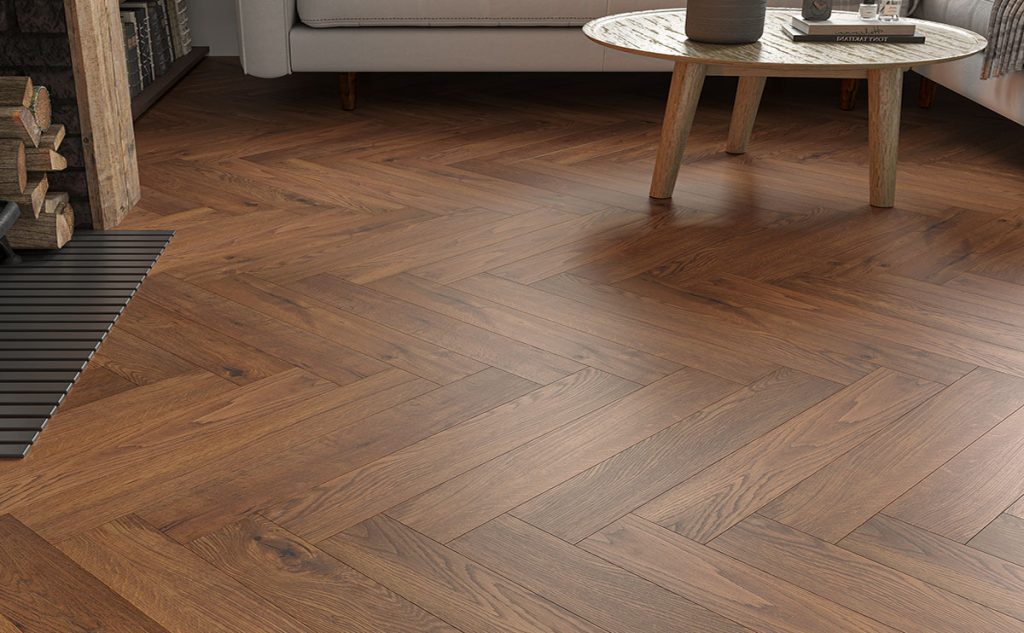
- the freedom to create custom layouts such as herringbone or borders
- a permanently bonded floor with a solid, fixed feel underfoot
Choose Click LVT (SPC) if you want:
- a faster, cleaner installation with no adhesive
- a built-in underlay for added comfort and sound reduction
- a floating floor system that locks together and can be installed more easily
What Is Glue-Down Luxury Vinyl (LVT)?
Glue-Down Luxury Vinyl (LVT) is a flexible vinyl flooring available in plank or tile form that is fully bonded to the subfloor using a specialist flooring adhesive. Unlike floating systems, each piece is fixed in place, creating a stable, low-profile floor with no movement once installed.
This type of LVT is typically thinner than click systems, usually around 2–3mm thick, which makes it ideal where floor height is restricted or where smooth transitions to adjoining rooms are important. The surface includes a protective wear layer that helps resist everyday scuffs, scratches, and general wear without making the floor feel hard or brittle.
Glue-Down LVT is 100% waterproof, meaning the material itself will not swell or warp when exposed to moisture. This makes it well suited to kitchens, bathrooms, and other areas where spills or humidity are common, provided the subfloor has been correctly prepared.
It’s important not to confuse Glue-Down LVT with self-adhesive vinyl films or peel-and-stick tiles. Those products are significantly thinner, rely on pre-applied adhesive, and lack the durability, dimensional stability, and long-term performance of true Glue-Down Luxury Vinyl flooring.
What Is Click LVT (SPC)?
Click LVT is a rigid core vinyl flooring system that locks together using a click-fit joint, allowing it to be installed as a floating floor without adhesive. It is commonly referred to as SPC (Stone Polymer Composite) vinyl, named after its dense core made from a blend of limestone and PVC.
Unlike flexible glue-down products, Click LVT has a solid, rigid construction that helps the floor remain stable and flat once installed. Typical boards are thicker than glue-down LVT, usually around 5–6.5mm, and many include an integrated underlay to improve comfort underfoot and reduce impact sound.
Click LVT (SPC) is fully waterproof and highly resistant to temperature changes, making it suitable for kitchens, bathrooms, and busy living areas. Because the boards lock together rather than being bonded to the subfloor, installation is generally faster and cleaner, particularly in renovation projects where minimal downtime is important.
As a floating system, Click LVT relies on a reasonably level subfloor and requires expansion gaps around the room perimeter. When installed correctly, it provides a durable, low-maintenance flooring solution that combines the look of wood or stone with the practical benefits of rigid vinyl construction.
Why “LVT” and “SPC” Are Often Confused
In the UK flooring market, the term “LVT” is frequently used as a broad label rather than a precise description. While LVT technically stands for Luxury Vinyl Tile, it refers to a category of vinyl flooring, not a single construction type. Over time, this has led to different products being grouped together under the same name, even when they behave very differently once installed.
Rigid core vinyl products such as SPC are often sold as “LVT” because they sit within the luxury vinyl category and offer a premium look and feel. For many retailers, using the term LVT is simpler and more familiar to customers, even though SPC flooring is structurally different from traditional glue-down LVT. As a result, click-fit SPC flooring is commonly labelled as LVT, adding to the confusion.
This distinction matters because installation method, subfloor preparation, and long-term performance vary significantly between glue-down and rigid click systems. Choosing a product based only on the label “LVT” can lead to the wrong flooring being selected for the space, particularly where floor height, sound performance, or underfloor heating are key considerations. Understanding how Glue-Down LVT and Click LVT (SPC) are built helps ensure the right flooring is chosen for both the room and the installation conditions.
Glue-Down LVT vs Click LVT (SPC): Key Differences
| Feature | Glue-Down Luxury Vinyl (LVT) | Click LVT (SPC) |
|---|---|---|
| Installation method | Fully bonded to the subfloor using flooring adhesive | Click-lock system installed as a floating floor |
| Subfloor tolerance | Requires a smooth, well-prepared and level subfloor | Requires a flat subfloor, but can tolerate minor imperfections |
| Floor build-up height | Low-profile, typically around 2–3mm | Thicker system, usually around 5–6.5mm including underlay |
| Acoustic performance | Quiet underfoot when bonded correctly; relies on subfloor and room structure | Often includes built-in underlay to help reduce impact sound |
| Repairs & plank replacement | Individual planks can be replaced, though removal requires care | Damaged planks may require unlocking from the nearest wall |
| Long-term stability | Very stable once bonded, with minimal movement | Stable floating system when expansion gaps are maintained |
Which Is Right for Each Room?
Both Glue-Down LVT and Click LVT (SPC) are waterproof and durable, but they tend to perform better in different spaces depending on layout, traffic levels, and installation conditions.
Kitchens
Both options are commonly used in kitchens. Glue-Down LVT is generally better suited where a low floor build-up is needed or where the room connects to multiple adjoining spaces. Click LVT (SPC) can be a good choice for quicker installations, particularly in renovation projects, provided the subfloor is flat.
Bathrooms
Glue-Down LVT is often preferred in bathrooms due to its fully bonded installation, which helps minimise movement in smaller rooms. Click LVT (SPC) can also be used in bathrooms, but careful attention must be paid to expansion gaps and perimeter detailing to maintain long-term performance.
Hallways
Hallways experience high foot traffic and frequent temperature changes from external doors. Click LVT (SPC) is generally better suited here due to its rigid core and stability, especially in busy households. Glue-Down LVT can also work well when installed over a well-prepared subfloor.
Bedrooms
Both flooring types are suitable for bedrooms. Click LVT (SPC) is often chosen for upstairs bedrooms due to its faster installation and built-in underlay, while Glue-Down LVT may be preferred where a firmer, more solid feel underfoot is desired.
Upstairs / Flats
In upper floors and flats, sound reduction and ease of installation are key considerations. Click LVT (SPC) is generally better suited thanks to its integrated underlay and floating construction, which can help reduce impact noise when installed correctly.
Commercial-Style Spaces
For areas with heavier use, such as home offices, studios, or light commercial environments, Glue-Down LVT is often the better option. Its bonded installation provides long-term stability and allows for individual plank replacement if needed.
Subfloor Preparation & Installation Considerations
Subfloor condition plays a major role in how both Glue-Down LVT and Click LVT (SPC) perform over time. While both systems are durable and forgiving in everyday use, they rely on different preparation standards due to how they are installed.
Glue-Down LVT generally requires a smoother, more precisely prepared subfloor. Because the flooring is fully bonded in place, any imperfections in the surface can transfer through to the finished floor. Proper smoothing and levelling help ensure a clean appearance and long-term stability. For detailed guidance, see our Glue-Down LVT Installation Guide.
Click LVT (SPC) is installed as a floating floor and therefore relies on the subfloor being flat and level rather than perfectly smooth. Minor surface texture is usually acceptable, but unevenness can place stress on the click joints and affect the floor’s performance if not addressed. For step-by-step instructions, refer to our Click LVT (SPC) Installation Guide.
In both cases, good preparation matters. A well-prepared subfloor helps prevent movement, reduces the risk of joint issues, and ensures the floor performs as intended throughout its lifespan. Installation methods and preparation requirements can vary by product, so manufacturer guidance should always be followed.
Underfloor Heating Compatibility
Both Glue-Down LVT and Click LVT (SPC) are suitable for use with underfloor heating when installed correctly and within the manufacturer’s specified limits. Temperature control is critical, as excessive heat can affect the flooring and the adhesive or locking system beneath it.
Glue-Down LVT is often preferred over underfloor heating because it is fully bonded to the subfloor, allowing heat to transfer more efficiently and evenly. Click LVT (SPC) can also be used with underfloor heating, but care must be taken to ensure maximum temperature limits are not exceeded and expansion gaps are maintained.
In all cases, the underfloor heating system should be commissioned gradually, and surface temperature limits set by the flooring manufacturer must be followed to ensure long-term performance.
For detailed guidance, see our underfloor heating installation guides:
Durability, Maintenance & Lifespan
Both Glue-Down LVT and Click LVT (SPC) are designed to cope well with everyday residential use when installed and maintained correctly. Durability is largely influenced by the quality of the product and the thickness of the protective wear layer rather than the installation method alone.
Most luxury vinyl flooring includes a transparent wear layer that helps protect the surface from scuffs, scratches, and general wear. Thicker wear layers are typically better suited to higher-traffic areas, while lighter domestic spaces may not require the same level of protection.
In terms of maintenance, both systems are low-maintenance and easy to clean. Regular sweeping or vacuuming to remove grit, combined with occasional damp mopping using a suitable vinyl-safe cleaner, is usually sufficient. There is no need for sanding, sealing, or specialist treatments.
With proper installation and care, Glue-Down LVT and Click LVT (SPC) can offer a long service life in residential settings. Actual lifespan will depend on factors such as traffic levels, subfloor preparation, and adherence to manufacturer care and temperature guidelines.
Cost & Long-Term Value
When comparing Glue-Down LVT and Click LVT (SPC), it’s important to consider both the upfront costs and the long-term value rather than focusing solely on the price per square metre.
Product costs can vary depending on design, thickness, and wear layer. Click LVT (SPC) is often priced slightly higher due to its rigid core construction and, in many cases, the inclusion of an integrated underlay. Glue-Down LVT may have a lower material cost, but this can vary widely by range and specification.
Installation costs can also differ. Glue-Down LVT typically involves more subfloor preparation and the use of adhesive, which can increase labour time. Click LVT (SPC) is generally quicker to install, which may reduce fitting costs, particularly in straightforward renovation projects.
Additional materials should also be considered. Glue-Down LVT requires a suitable adhesive and a well-prepared subfloor, while Click LVT (SPC) may not need a separate underlay if one is already built in. Over time, both options offer similar long-term maintenance costs, as routine cleaning and care requirements are minimal and broadly comparable.
FAQs
Final Verdict – Glue-Down LVT or Click LVT (SPC)?
There is no single “best” option — the right choice depends on your space, installation conditions, and how the floor will be used. Glue-Down LVT is generally better suited where a low floor build-up, custom layouts, or a permanently bonded feel are important, while Click LVT (SPC) is often the preferred option for faster installations and floating floor systems.
Key factors such as subfloor condition, room layout, sound considerations, and underfloor heating should all play a role in the decision. Understanding how each system is constructed and installed makes it much easier to choose a floor that will perform well long term.
To explore your options further, browse our Glue-Down LVT and Click LVT (SPC) flooring ranges to find a style and specification that suits your project.
About Floor Warehouse
Floor Warehouse is a UK-based flooring specialist with over 15 years of combined industry experience in sourcing, selling, and advising on wood, laminate, SPC, and LVT flooring. Our expert advice is written to help homeowners, designers, and trade professionals make informed flooring decisions — from installation and maintenance to underfloor heating compatibility, sustainability, and long-term performance. All guidance is based on real-world product knowledge, manufacturer standards, and common questions we see every day from customers across the UK.
View all posts by Floor Warehouse