Ultimate Guide to Measuring Your Room for Flooring – Step by Step
Are you thinking about refreshing your home with new flooring? Or perhaps just got the keys to your new flat and want to update the interior. Whether you’re eyeing that sleek hardwood floor, luxurious carpet, or waterproof stylish vinyl, getting the right amount of flooring material starts with an accurate measurement of your room. This guide is tailored especially for beginners and will walk you through the process of measuring your space like a pro. By the end, you’ll be ready to order your flooring with confidence—no overages or shortfalls!
Step 1: What You’ll Need
Before you begin, it’s important to have the right tools on hand. Here’s what you’ll need:
- Tape Measure: A traditional tape measure will work just fine, but for even easier measurement, consider a digital laser measuring tool. It can help you reach longer distances and read measurements more accurately.
- Notation Tools: While pen and paper are reliable, using your smartphone to take notes or snap pictures of the measurements directly can make the process smoother and reduce the chance of losing your measurements.
- Calculator: though this is optional, it’s not recommended to rely on mental math for this task—use a calculator to ensure accuracy. Most smartphones come equipped with a calculator app, which is perfect for crunching those numbers on the go. If you're confident in times tables then by all means do the calculations using your mental maths.
Step 2: Measure the Room
Measuring a room sounds straightforward, but a few tips can prevent common errors:
- For Rectangle Rooms: Measure the length and the width in metres, ensuring you start from the walls' edges. If using a digital tool, simply point and shoot from one side to the opposite side.
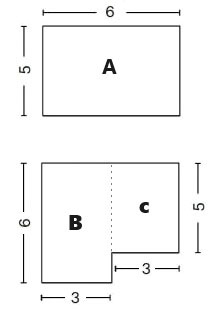
- Irregular Shaped Rooms: Break the space into manageable rectangular or square sections (see example below in step 4), measure each section, and then add the areas together.
- Using the Right Units: Stick to centimetres and metres since flooring in the UK is typically sold by the square metre.
Step 3: Double Check Your Measurements
A wise carpenter once said, “Measure twice, cut once” demonstrating that accuracy is key, so always double-check your measurements:
- Repeat Measurements: Measure twice before recording your final numbers to ensure there are no discrepancies or mistakes.
- Consistency is Crucial: Always use the same unit of measurement to avoid conversion errors later (cm/m).
Step 4: Calculate the Area
Once you have your room's dimensions, you can calculate the area:
- Simple Rectangles: Multiply the length by the width.
- Complex Shapes: Add the area of each section together. For example, an L-shaped room would require calculating each leg of the ‘L’ and then summing those areas.
Please check out our floor measuring guide button below for examples of both a square and an L-shaped room calculation.
Step 1: Measure Your Room
- Diagram A: A rectangle room: 5m by 6m
- Diagram B & C: An L-shaped room split into:
- Part B: 6m by 3m
- Part C: 3m by 5m
Step 2: Calculate Area
- Diagram A (Rectangle):
5m x 6m = 30m² - Diagram B & C (L-Shape):
(Part B): 6m x 3m = 18m²
(Part C): 3m x 5m = 15m²
(B): 18m² + (C): 15m² = 33m²
- Diagram A (Rectangle):
Step 3: Add 10% for Wastage
- Diagram A: 30m² + 10% = 33m² total
- L-Shape (B+C): 33m² + 10% = 36.3m² total
Quick Tips
- Measure twice for accuracy using a tape measure.
- Always include an extra 10% for wastage in your order.
- Don't forget to measure the space inside wardrobes and under doorways.
- If you're unsure, consider hiring a professional to measure your space. This can save time and ensure accuracy.
Step 5: Factor in Wastage
To ensure you have enough flooring to complete the job without interruptions, add 10% to your total area:
- Why Wastage Matters: This extra allows for cuts at the edges of the room and minor imperfections in the flooring.
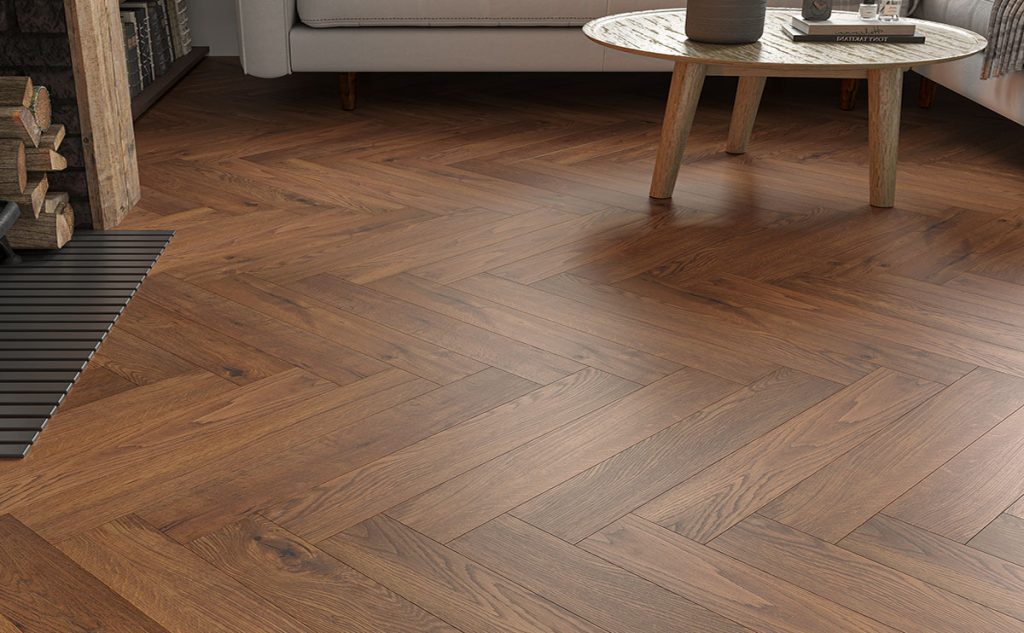
- Adjusting for Complexity: In rooms with complex shapes or when using intricate patterns like herringbone, consider increasing the wastage percentage to accommodate more cuts.
Quick Tips
- Use a Helper: Measuring large spaces can be easier with an extra pair of hands.
- Check Floor Level: Ensure the floor is level; if not, this might affect how much flooring is needed.
- Consider Professional Help: If you're unsure about measuring yourself, hiring a professional can be a good investment.
There you have it, a simple guide to measuring your room for new flooring. With these steps, you can confidently calculate how much flooring you’ll need to transform your space. Remember, taking the time to measure accurately at the start can save you both time and money in the long run. Ready to find the perfect flooring for your home? Dive into our extensive collection and pick the best match for your newly measured space!
About Floor Warehouse
Floor Warehouse is a UK-based flooring specialist with over 15 years of combined industry experience in sourcing, selling, and advising on wood, laminate, SPC, and LVT flooring. Our expert advice is written to help homeowners, designers, and trade professionals make informed flooring decisions — from installation and maintenance to underfloor heating compatibility, sustainability, and long-term performance. All guidance is based on real-world product knowledge, manufacturer standards, and common questions we see every day from customers across the UK.
View all posts by Floor Warehouse