


VOCs & Certifications
VOCs & Certifications FAQs
Understand flooring emissions, environmental declarations, performance ratings and the certifications shown across our product range.
VOCs, or volatile organic compounds, are substances that can be released into the air from materials and products used inside a building.
Flooring with independently tested low VOC emissions can help support good indoor air quality. VOC performance varies between products and is shown through recognised testing or certification where available.
FloorScore is an independent indoor-air-quality certification for hard-surface flooring, adhesives and underlays. It assesses VOC emissions against established limits using laboratory testing.
A FloorScore-certified product has met the programme’s requirements for low VOC emissions. FloorScore relates specifically to emissions and does not automatically confirm properties such as phthalate content, slip resistance or durability.
GREENGUARD Gold is a low chemical-emissions certification administered by UL Solutions. It applies stricter emissions limits than the standard GREENGUARD certification and includes additional requirements for environments used by children and other sensitive groups.
Products carrying the GREENGUARD Gold mark have been independently tested against the programme’s chemical-emissions criteria.
Indoor Air Comfort Gold is an emissions certification operated by Eurofins. It combines requirements from several European VOC regulations, voluntary labels and sustainable-building schemes.
The certification indicates that a product has met a comprehensive set of low-emission requirements for indoor use.
TÜV PROFiCERT-product Interior is an independent certification programme for interior building materials, including flooring. It confirms that the product has been tested for VOC emissions and meets the programme’s requirements for indoor use.
A+ is the highest classification within the French VOC emissions labelling system for construction and decorative products.
The classifications run from A+ to C, with A+ representing the lowest emissions category within that scheme. This classification relates to VOC emissions and should not be confused with durability, energy efficiency or usage ratings.
E1 is a recognised European emissions classification for wood-based materials. It confirms that the tested material complies with the specified limit for formaldehyde emissions.
These terms describe the plasticisers used to provide flexibility in luxury vinyl flooring.
“Phthalate-free” indicates that the product has been manufactured without the phthalate plasticisers covered by the manufacturer’s declaration. “Zero ortho-phthalates” refers more specifically to the absence of traditional ortho-phthalate plasticisers. DOTP is a non-ortho-phthalate plasticiser commonly used as an alternative.
The applicable plasticiser information is shown on the individual product page where it has been provided for that range.
An Environmental Product Declaration, commonly called an EPD, is a standardised and independently verified report detailing a product’s environmental impact across defined stages of its life cycle.
EPDs help architects, specifiers and other customers assess building materials using consistently presented environmental data.
Reaction-to-fire classifications describe how a flooring product performs when exposed to fire under controlled test conditions. Flooring ratings may include classifications such as Bfl-s1 or Cfl-s1.
The letters and numbers describe the product’s reaction-to-fire and smoke performance. They do not mean that the flooring is fireproof. The required classification will depend on the building and intended application.
Slip-resistance ratings indicate how a floor performs under a specified test method. Depending on the product, you may see classifications or results such as DS, R10 or a Pendulum Test Value.
These results use different testing methods and should not be treated as directly interchangeable. For safety-critical environments, confirm the required test and rating before selecting the flooring.
Usage classifications indicate the type and level of traffic for which a flooring product has been designed.
Class 33 generally denotes heavy commercial use, while Class 42 relates to general light-industrial use. The classification should be considered alongside the flooring construction, wear layer, warranty and intended environment.
Available certifications and performance information are shown on the individual product page, including within the Technical Performance & Certifications section where provided.
Specifications vary between ranges and products, so only the certifications and technical information stated for the individual product should be relied upon.

Still Need Help?
Can’t find the answer you’re looking for? Our flooring experts are here to help with product, technical and ordering questions.

Please complete the form below and a member of our team will get back to you as soon as possible.
We aim to respond to you within 24 hours.

 White
White
 Invisible
 Natural
 Golden
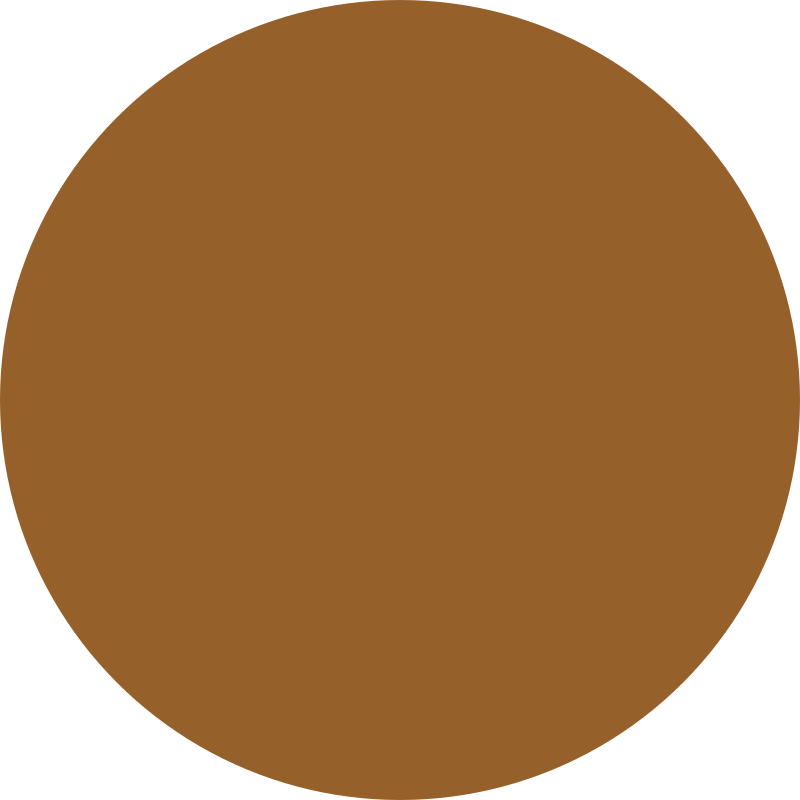 Brown
Brown
 Grey
Grey


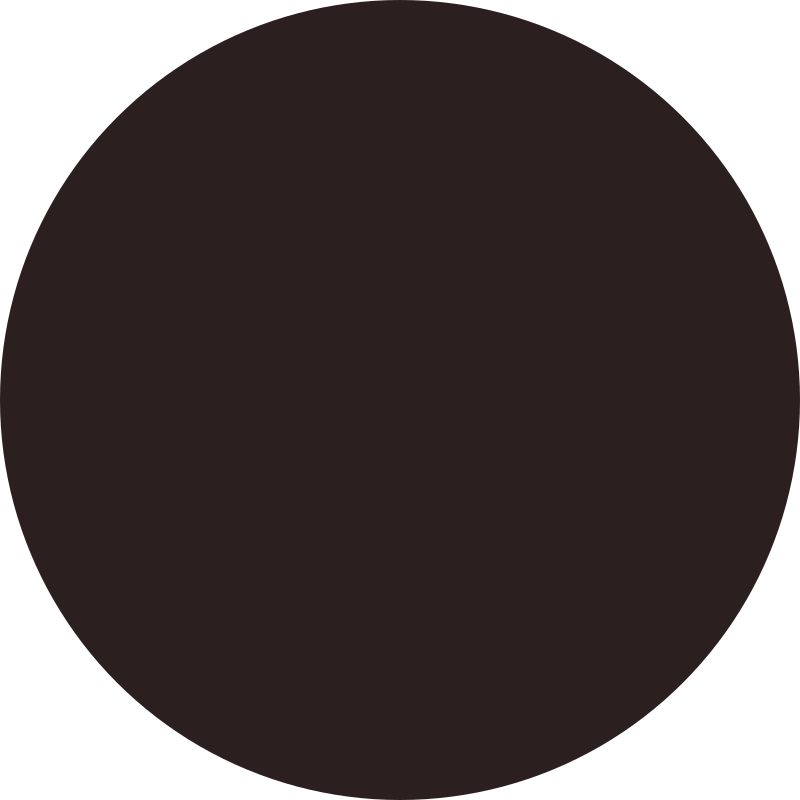 Black
Black


